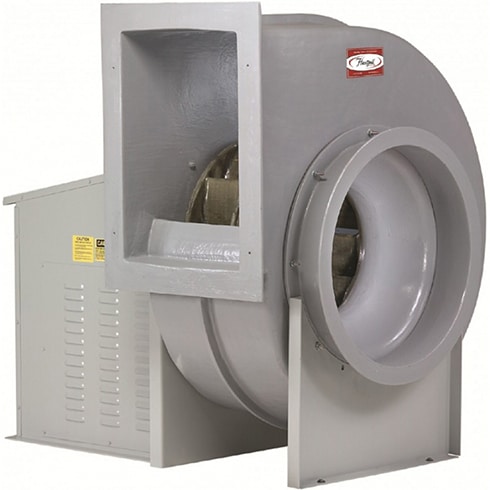
Fiberglass fans have always resisted corrosion. What is changing is how much longer, quieter, and safer the newest construction makes them run.
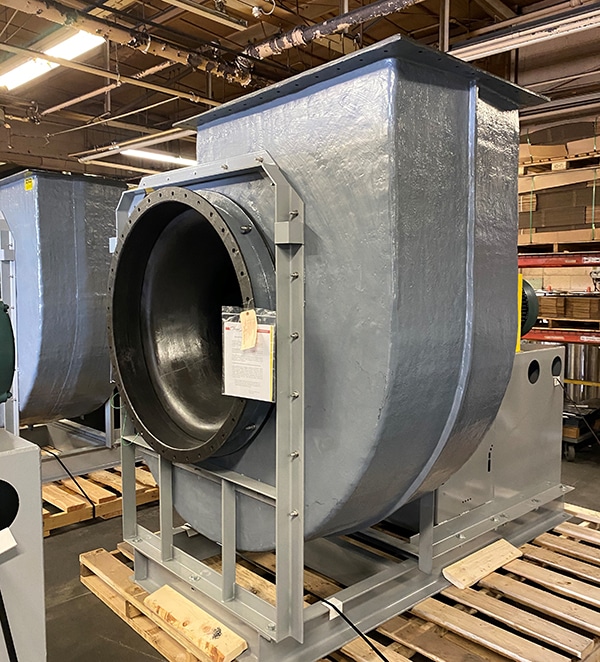
For decades the case for fiberglass reinforced plastic (FRP) fans came down to one thing: in airstreams carrying hydrogen sulfide, ammonia, chlorine, or acid mist, plastic composites survive where painted metal corrodes. That core advantage has not changed. What is changing is everything around it. Resin chemistry, wheel molding, balancing methods, and specialty coatings have all advanced, and the result is a generation of fiberglass fans that hold tighter tolerances, run quieter, and last longer in the harshest plants. For anyone specifying ventilation today, the meaningful question is no longer whether to use FRP, but which construction will deliver the longest service life.
Stronger Wheels, Smarter Balancing
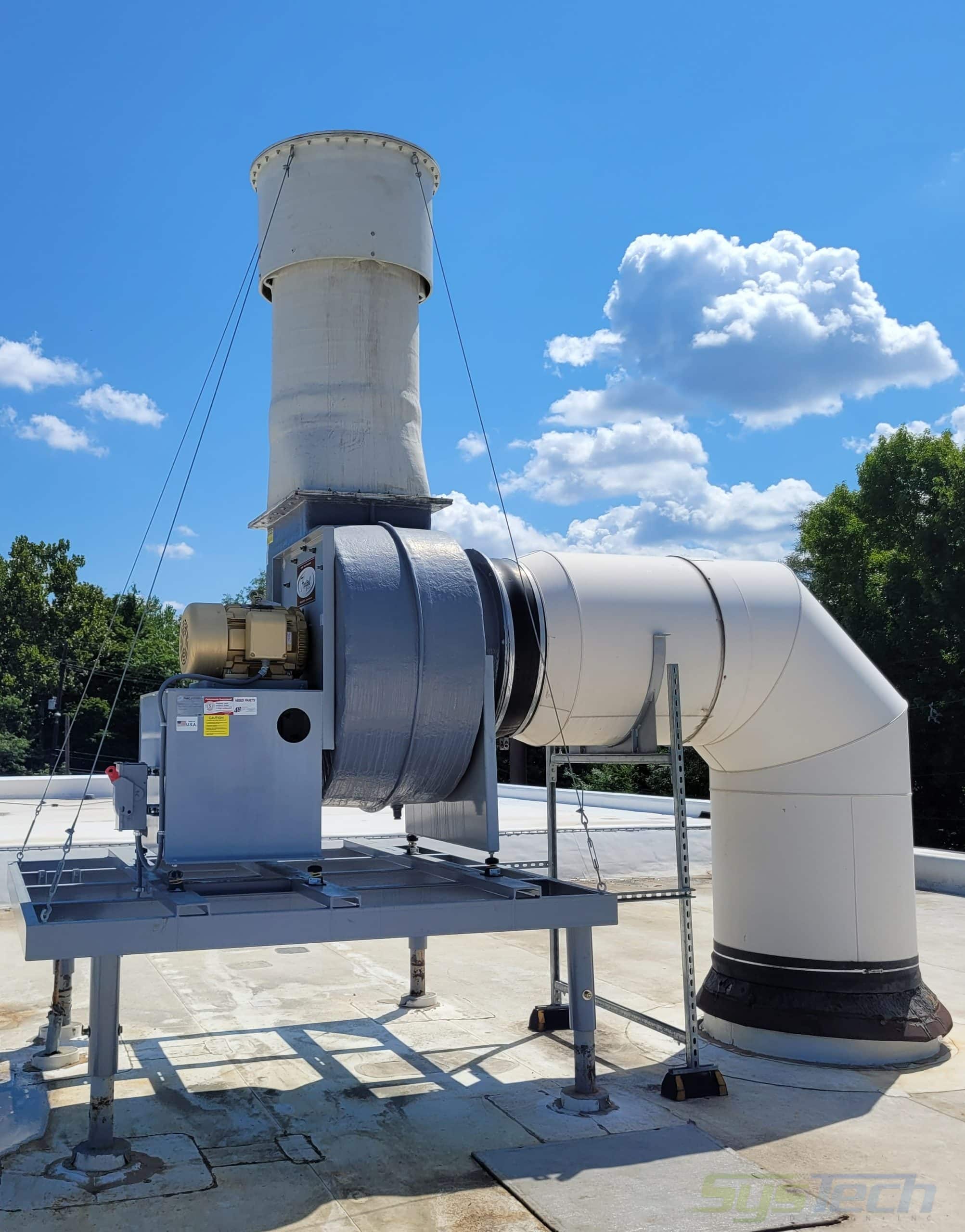
The biggest gains are in the wheel. Older designs bonded multiple pieces together and balanced them by drilling and adding weights, a method that introduces stress and shortens wheel life. The current direction is a one-piece, die-formed wheel with the only metal component, the hub, fully encapsulated in resin so no bare metal ever meets the airstream. Pair that with two-plane dynamic balancing instead of drilled correction weights, and the wheel runs truer at higher speeds with less vibration. The payoff shows up as smoother operation, lower noise, and a longer interval before maintenance.
Resins and Coatings Built for Worse Conditions
Material science is where FRP construction keeps moving. Corrosion-resistant vinyl ester resins now achieve a Class 1 flame-spread rating of 25 or less, so a fan can sit inside a building and still meet fire requirements. Standard UV inhibitors and flame-retardant additives let housings handle sun and weather on the roof, and a synthetic surfacing veil adds a resin-rich barrier on every surface touching the corrosive stream. For the worst duty, abrasion-resistant and electrically grounded coatings address erosive dust and static buildup. These options now let a single fiberglass exhaust fan handle temperatures up to roughly 250°F.
Whole-System Corrosion Resistance
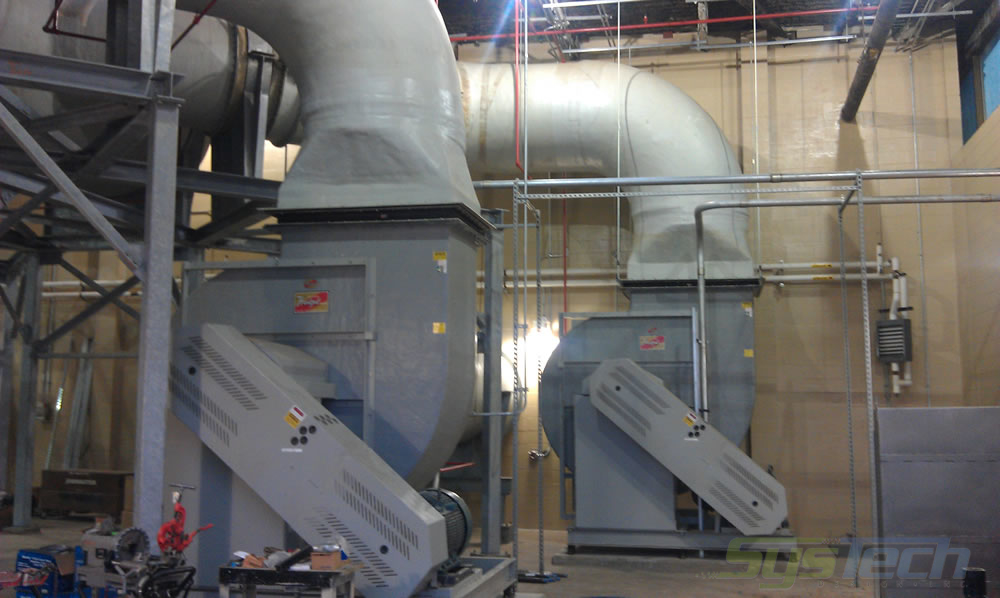
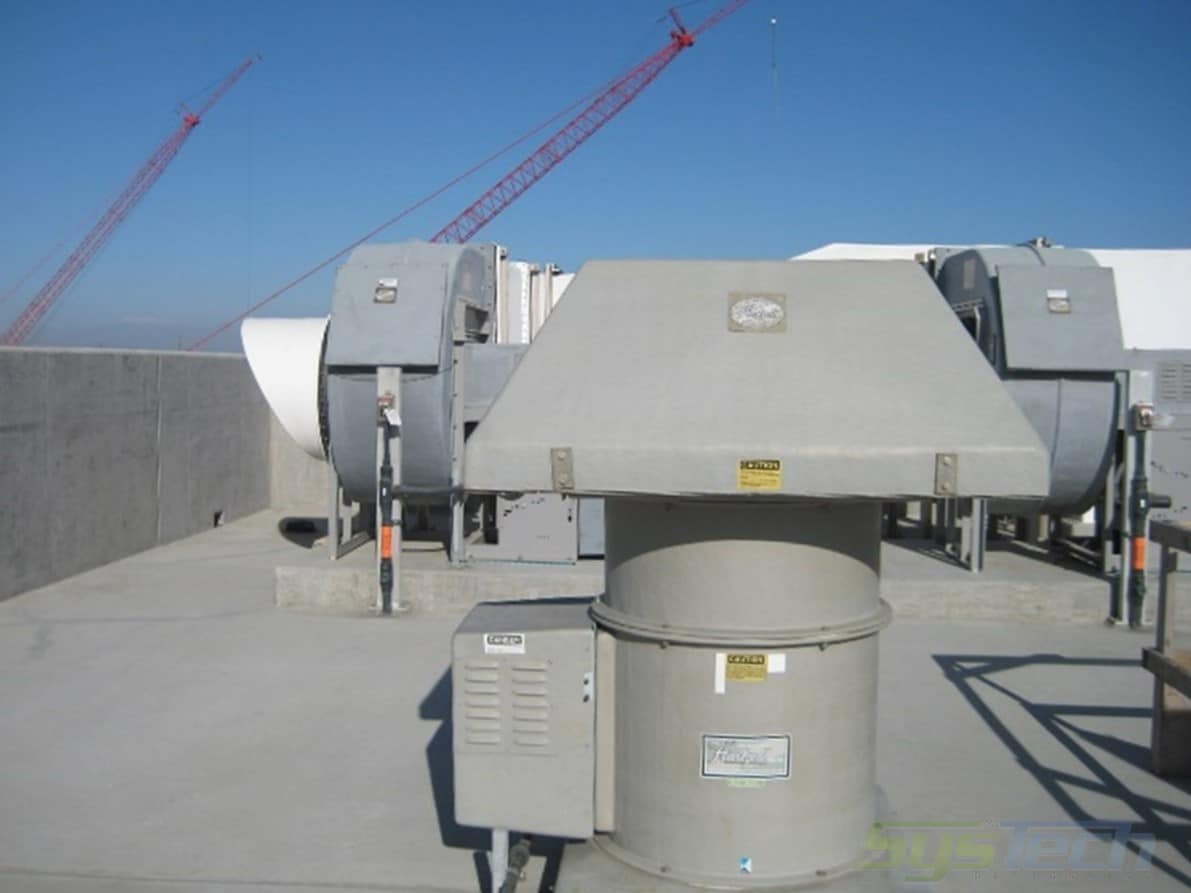
A fan only lasts as long as the components bolted to it. The newer thinking treats the entire airpath as one corrosion-resistant package, matching the fan with FRP accessories built from the same resins. That means specifying fiberglass FRP dampers for backdraft and flow control alongside industrial louvers, discharge stacks, and duct in the same family. When every wetted surface shares the same chemistry, there is no weak metal link to corrode first, and the whole system ages at one predictable rate.
What to Look for in Modern FRP Construction
| Construction Feature | Why It Matters |
|---|---|
| One-piece molded wheel | No bonded seams to fail; encapsulated hub keeps metal out of the airstream. |
| Two-plane dynamic balancing | Avoids drilled weights that stress and weaken the wheel. |
| Class 1 flame-spread resin | Rating of 25 or less allows indoor installation under fire codes. |
| Synthetic surfacing veil | Resin-rich barrier on every surface exposed to corrosives. |
| Specialty coatings | Abrasion, corrosion, and static or explosion protection for severe duty. |
Choosing a fan that has to survive harsh chemicals is a construction decision, not just a catalog pick. Let SysTech match the right FRP build to your airstream.
Call SysTech: 800-456-9460