
Dust Control Booths & Rooms
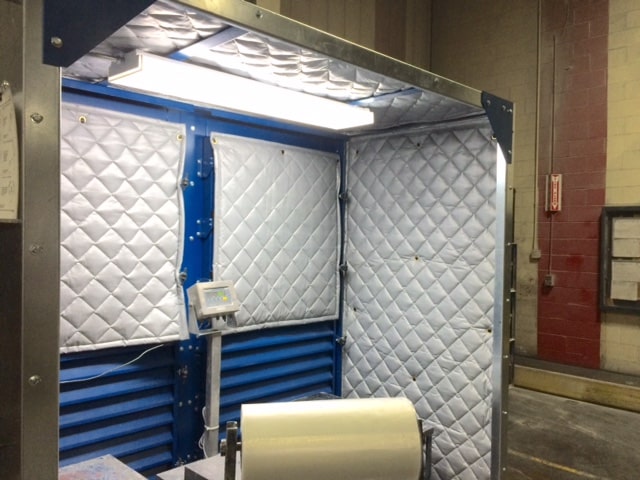
Isolation of “dirty” areas or processes within a facility is a means to control plant indoor air quality. Containing the airborne materials and subsequently filtering the collected air maintains a healthy workspace. The booth structure simply encapsulates the polluting source. The design considers the following: materials being collected, required carrying velocity, the position of worker (s) to the exhaust air intakes, and where the cleaned air is directed, either back to the booth, room, or to a remote location. Dust, fume, odor, and mist are all materials that can effectively be captured, but efficiency can be affected by the time the material stays in suspension and the distance from the source to the inlet of the filtration device.
Enclosing a dust source and containing the “dirty air” in a walk-in booth, or enclosure, minimizes the total amount of airflow required. The dust control enclosure encapsulates processes in a facility where materials are often blown around by cross drafts, man coolers or compressed air, tracked around by forklifts or launched into space by rotating equipment like sanders and grinders. All of which creates issues in other areas of the plant.
Enclosure construction (varies with size of the enclosure) is a structural tube framework with walls and roof of CS or SS sheet metal, vinyl sheeting, or noise blanketing. Integral to the enclosure can be an air filtration bank, renewable cartridge dust cleaner or wet scrubber to filter the collected airstream material. Mounting the filtration unit remotely is an option.
Recently, air cleaning of large in-place rooms where large assembles are being processed, fabricated or assembled, has effectively been addressed by installing air filtration modules or units into an end wall. Careful positioning of the processes and workers needs to be included in the final design.
Dust Containment Booth for Batch Mixing
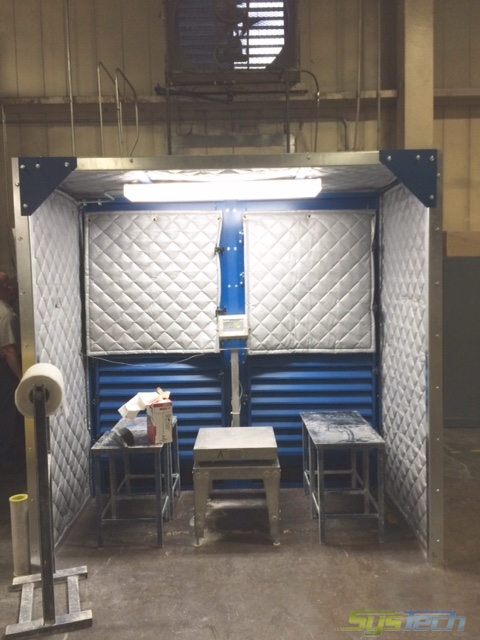
Dust Containment Booth for Batch Mixing
Unit has galvanized side walls, lined with Noise Blankets and has overhead lighting. Twin Donaldson Model DWS dust collection modules pull airborne particulate away from the operator’s breathing zone. The booth is equipped with a continuous pulse cleaning system which maintains indraft velocity and the cartridge filters with maximum lifespan. Containment was necessary to prevent cross product contamination.
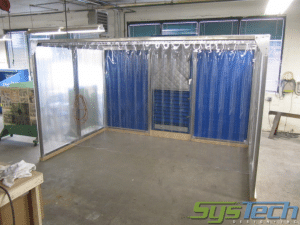
Environmental Control Booth in Powder Mixing Operation
Environmental Control Booth in Powder Mixing Operation
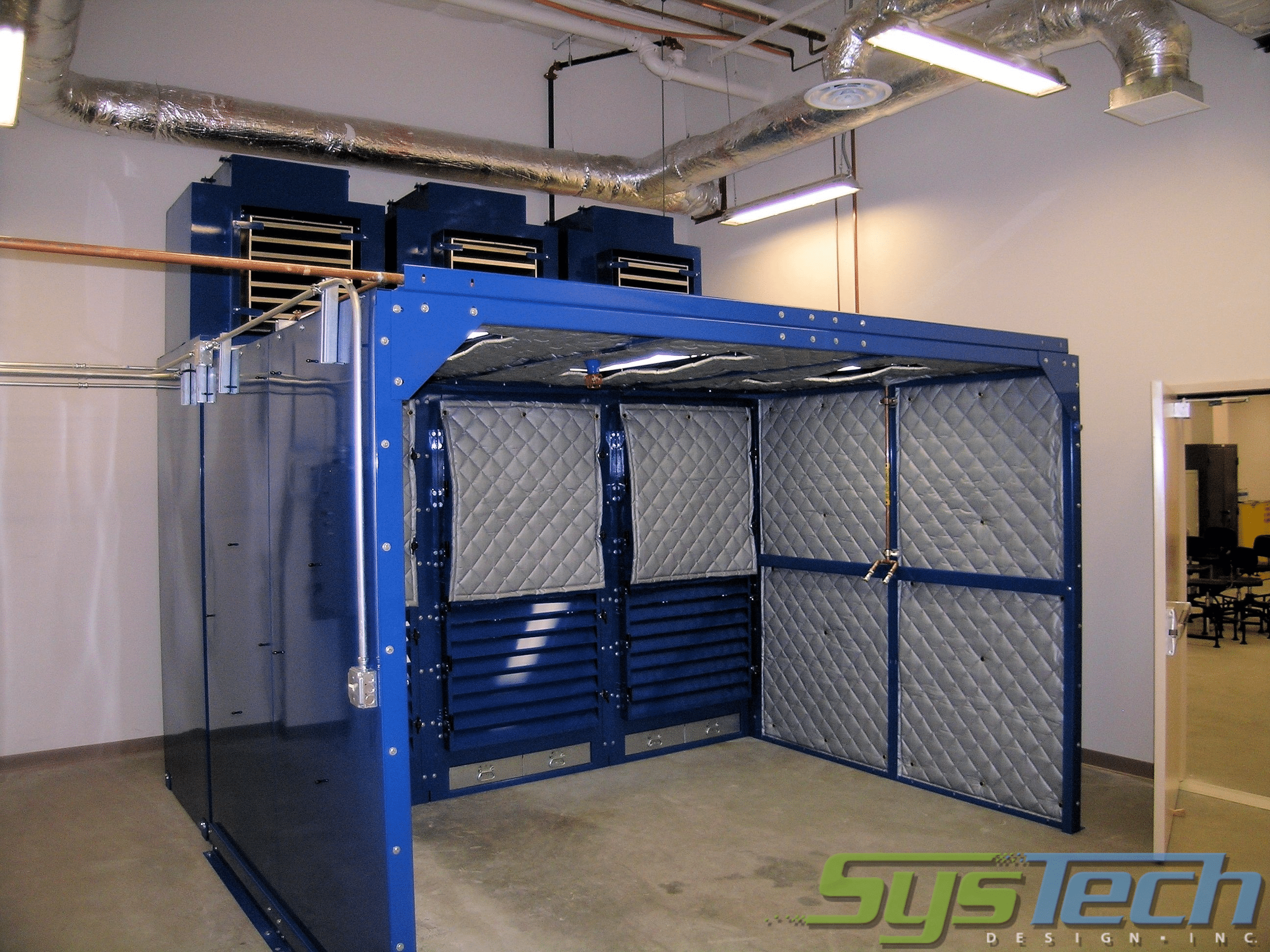
Environmental Control Booth size 8’d X 11’w X 8’h – manual powder mixing operation. There were three (3) Donaldson Model DWS 4-3 modules, exhausting 13,500 CFM, with HEPA after-filters were included in this design. Dust Control Booth with noise blankets on the metal wall and ceiling sections with interior lighting. Donaldson Torit DWST compressed air pulse cleaning dust collection modules in back wall with return air HEPA filters. The top mounted dampers are closed when collecting stainless steel weld smoke for Hex Chrome containment, but when they run carbon steel, they open louvers for recirculation.
Wet Scrubber Walk-In Booth
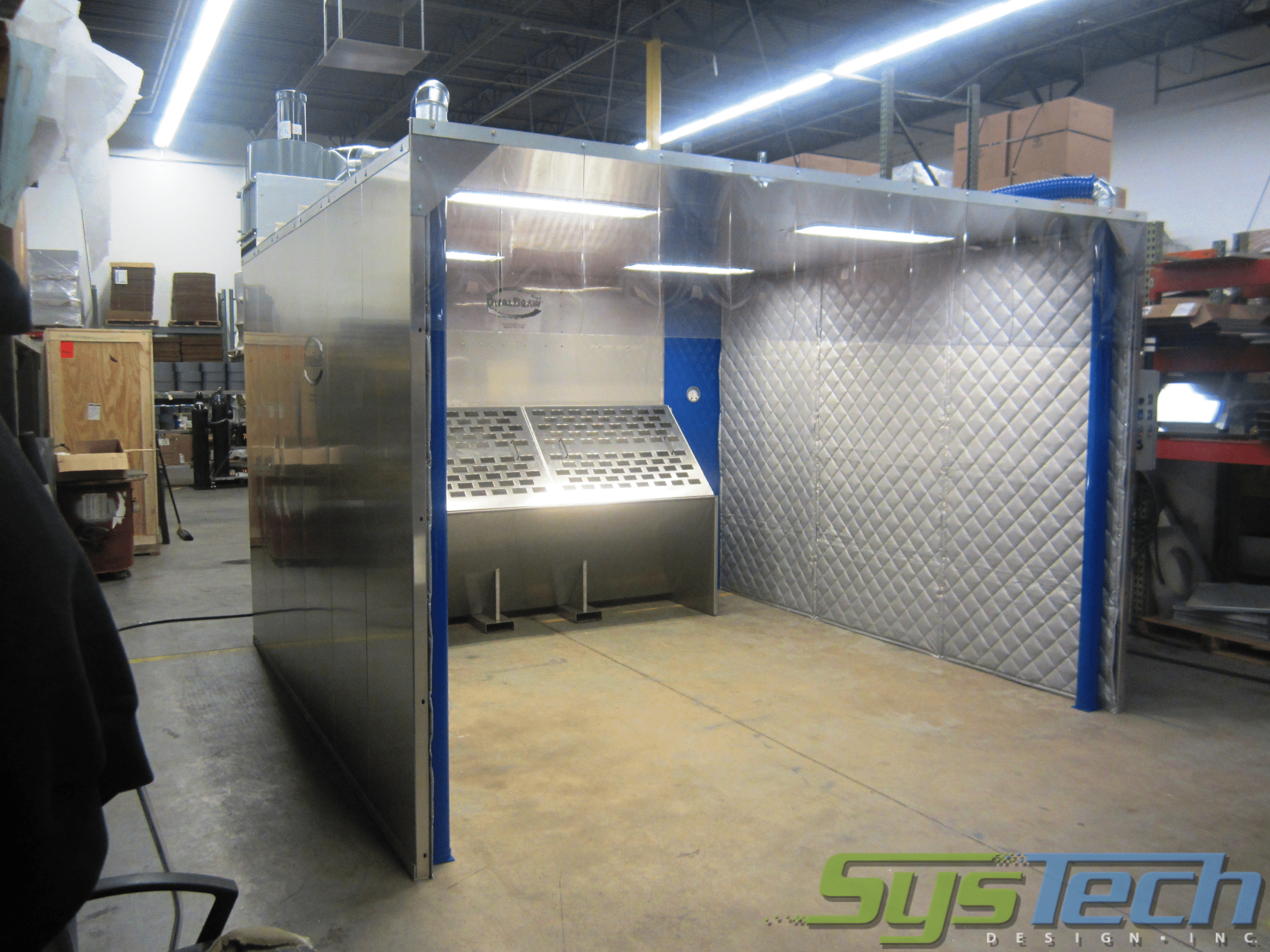
Wet Scrubber Walk-In Booth
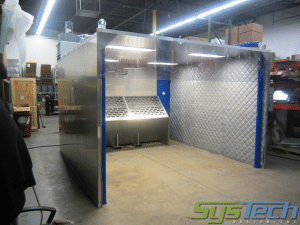
Wet Scrubber Walk-In Booth applied to aluminum debur process - 12' x 12'x 8' in size, 15 HP Motor, interior sound curtains, 8,000 CFM with 2,000 CFM regain airflow. Scrubber is made of 304 SS with booth constructed of aluminum. Equipment complies with NFPA 484 (2015) guidelines for wet collection of combustible dust. Dust Control Booth with a Wet Scrubber on the back wall where aluminum dust from a grinding operation was being collected. The unit was constructed of a stainless steel shell with noise blankets on interior with cleaned air returned to the face of the enclosure to enhance entrance of dust into the wet unit. Regain air systems are an available option on all these units.
Environmental Control Booth for Metal Working Operation
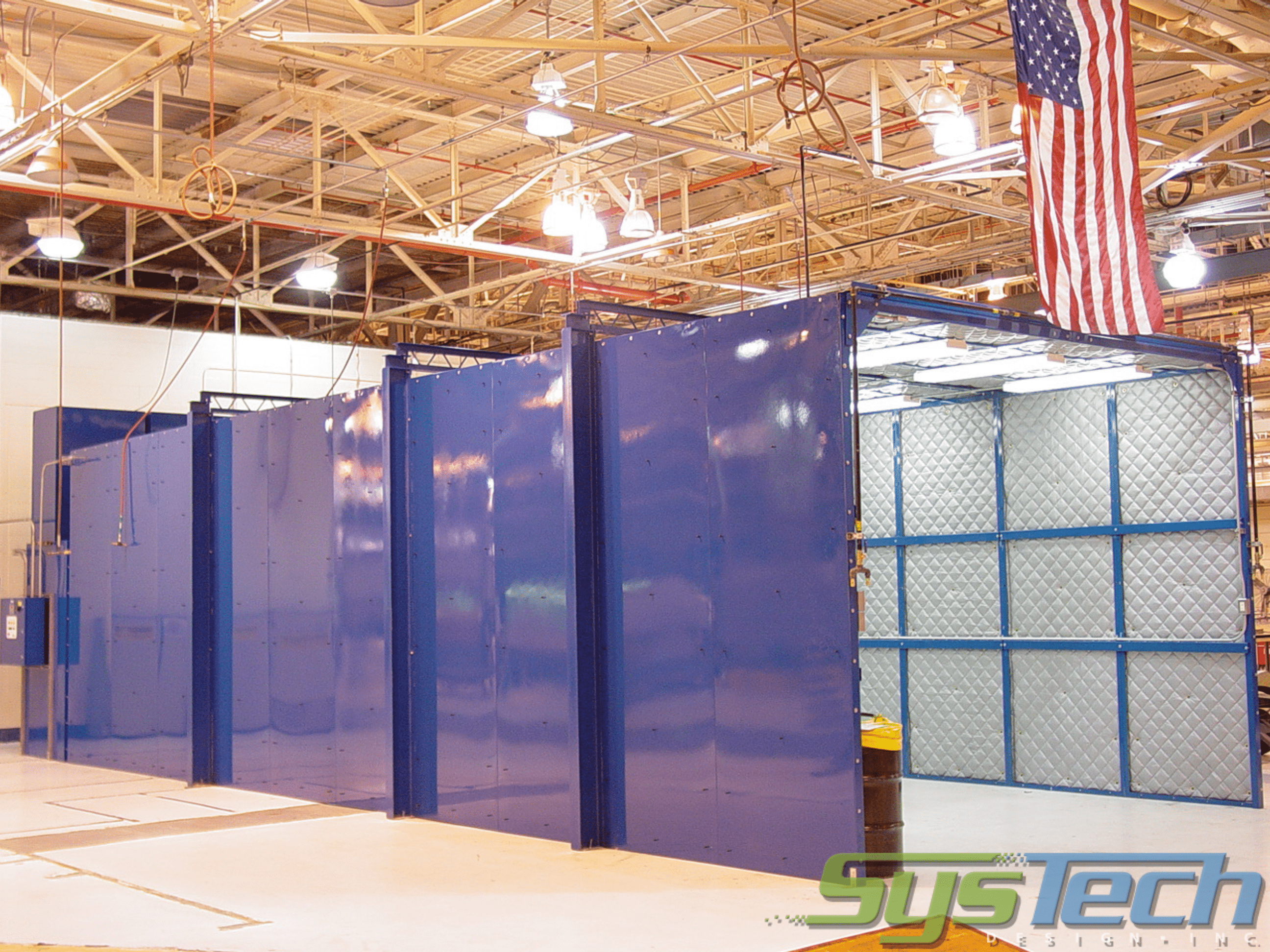
Environmental Control Booth for Metal Working Operation
Metalworking operation using a Donaldson Torit Environmental Control Booth size 37’d X 11’h X 11’w with four Model DWS 6-4 units filtering 22,000 CFM of dust laden air. Environmental Control Booth for grinding large airplane parts. Booth is a Donaldson Torit ECB with noise blankets and lighting. Location is within a large facility where the booth isolates a smaller metal grinding area.
Dust Control Booth Maintenance Shop
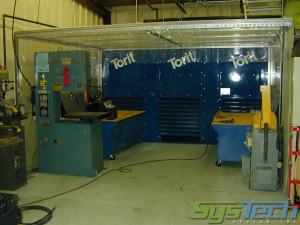
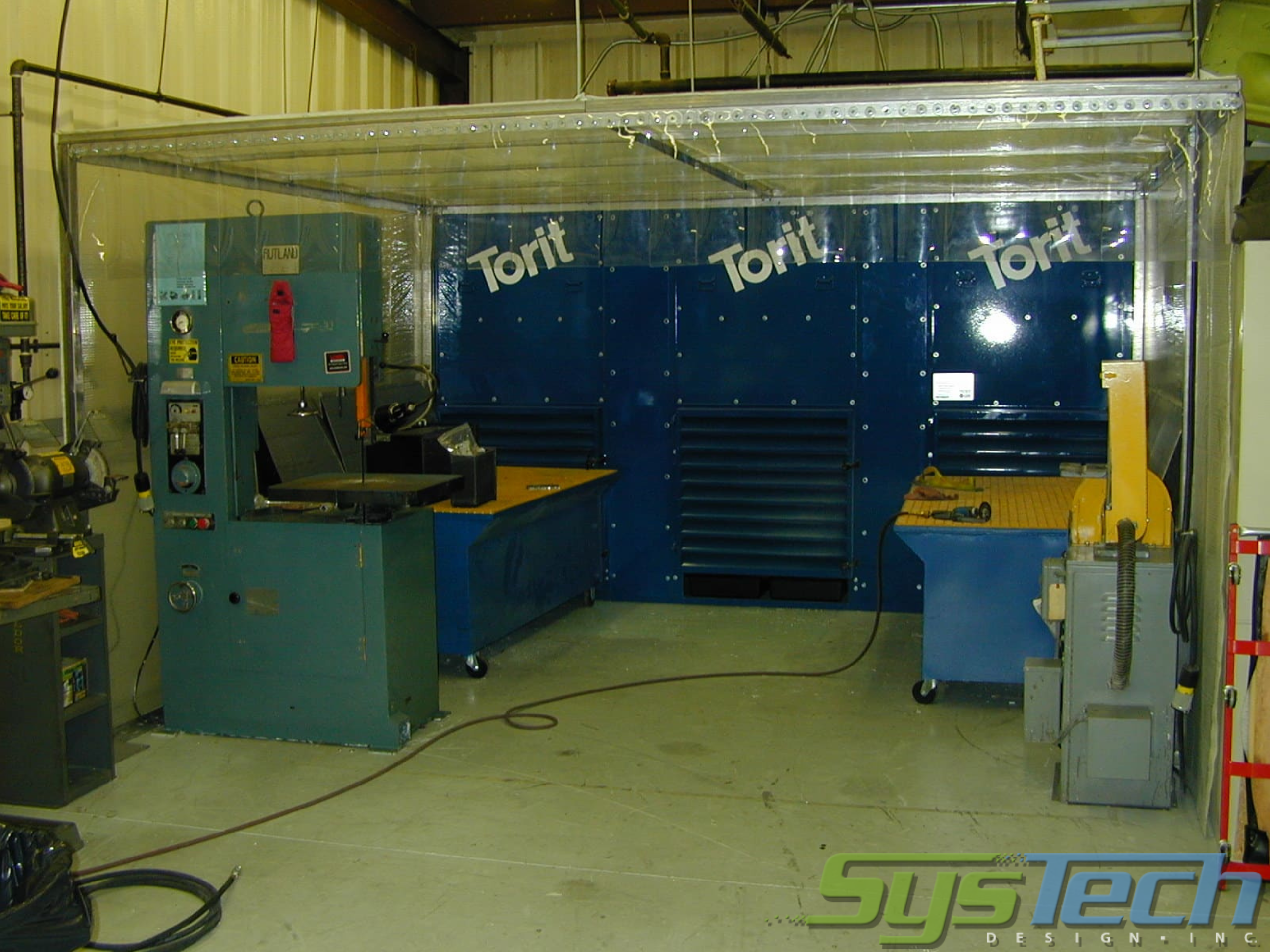
Dust Control Booth Maintenance Shop
Dust Control Booth as a “mini” Maintenance Shop - Located in an airplane hangar, the booth was designed with Donaldson Torit ECB dust collection modules positioned on the back wall with booth wall and ceiling, reinforced vinyl sheeting. Machinery within the booth included welders, band saw, sander and twin downdraft tables.
Walk-in Dust Control Enclosure
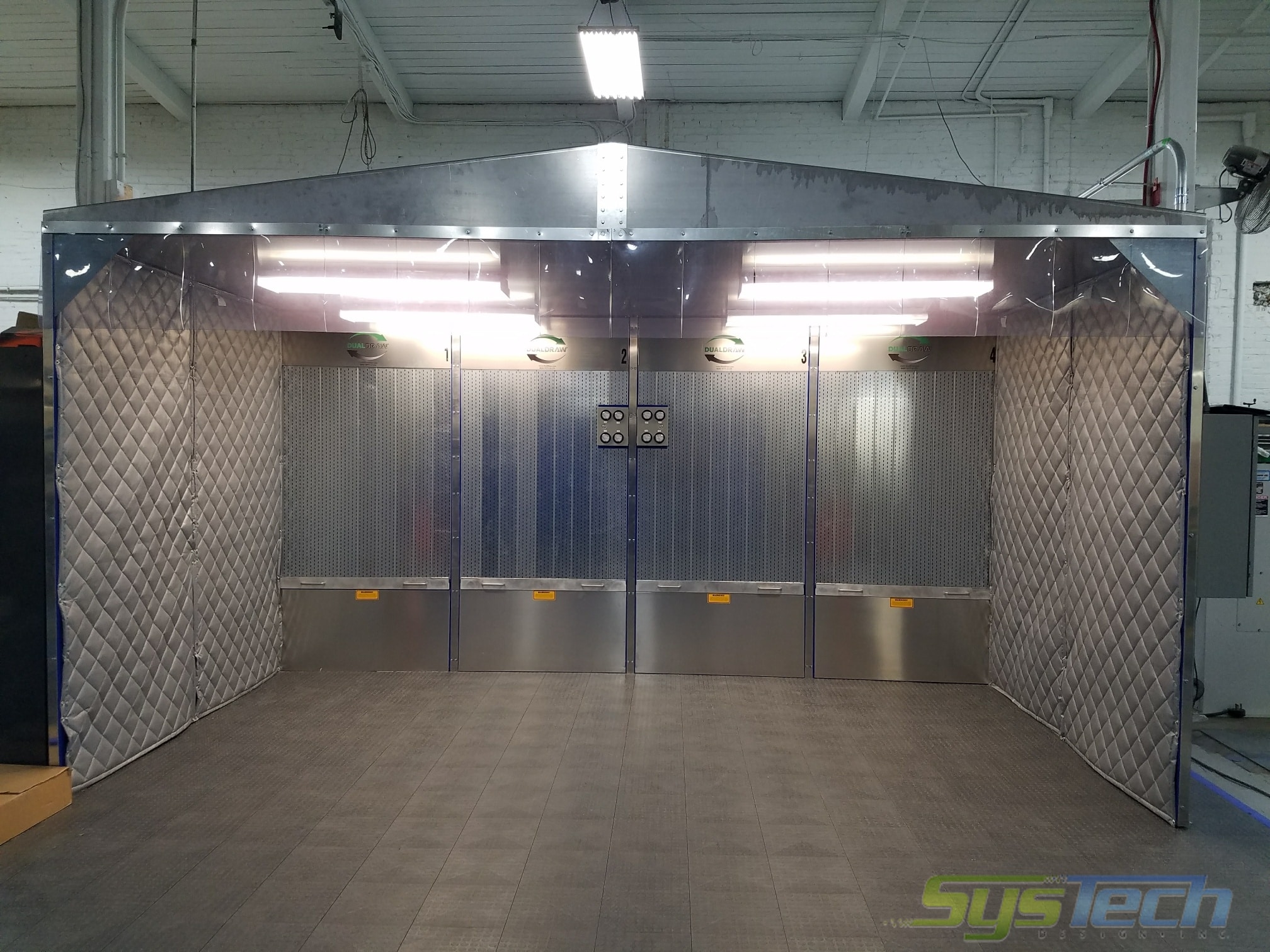
Walk-in Dust Control Enclosure
Unit was constructed of aluminum, with noise blankets and overhead lighting - Unit has panel filters in the back wall for light dust filtration. Application was for a custom aluminum displays and signage for the textile/clothing industry.
FRP Dust Control Booths
FRP Dust Control Booths
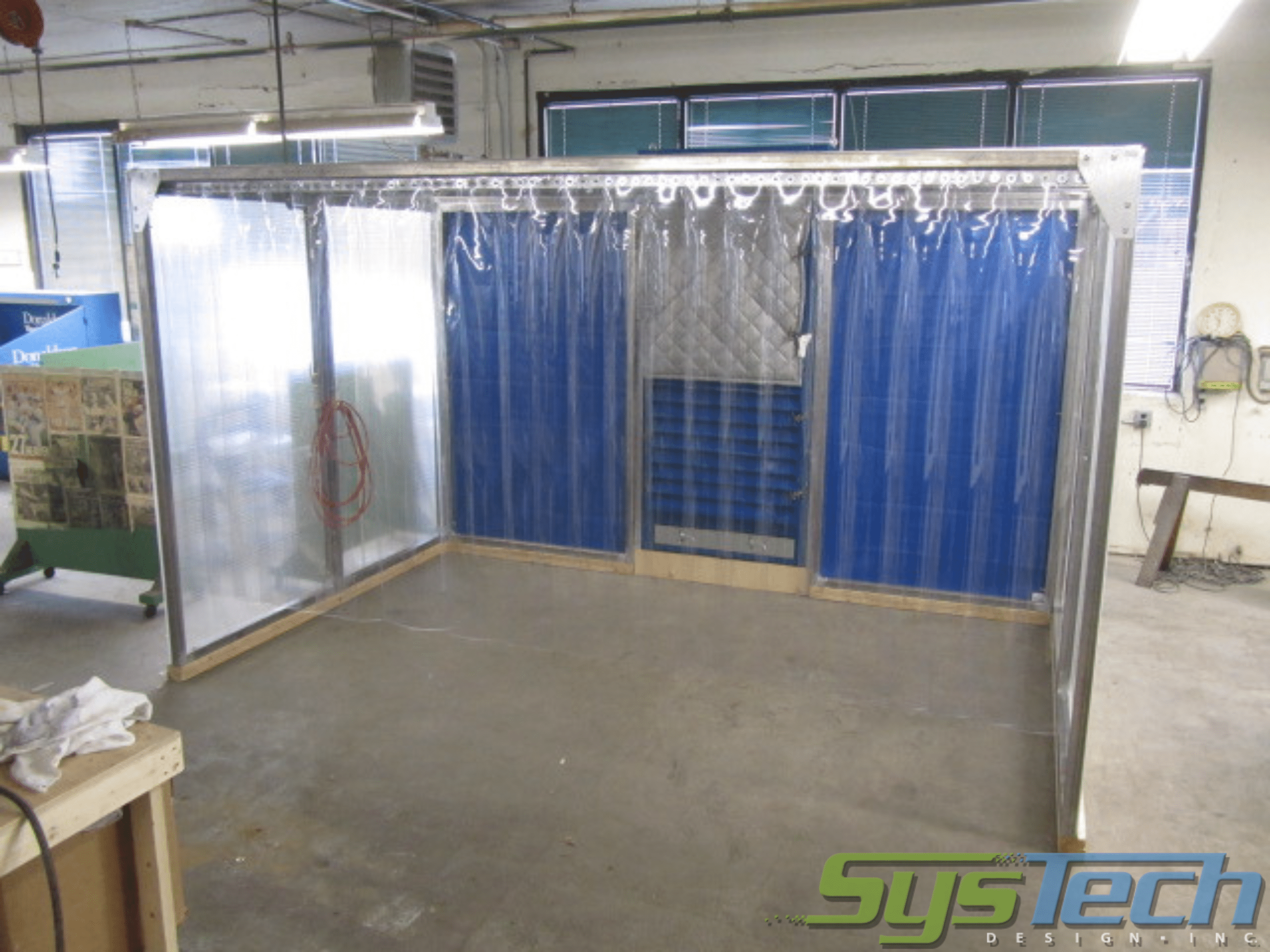
Dust Control Booth comprised of three (3) Donaldson DWS modules with enclosure walls and ceiling of clear and/or grey vinyl. The process was grinding of FRP materials. The skirt on unit face increased the air velocity into the booth providing better isolation of dust within the booth space.
Advantages of Dust Control Booths
- Walk-in or walk-up designs
- Moveable
- Free of cross drafts
- Adjustment of capture hoods not necessary
- Lowest dollar per CFM of all dust collection process options
- Isolates dusty or odorous areas within a plant
- Captures and contains all the airborne dust from the process
- Cost-effective verses a ducted dust collection system
- Includes windows for viewing interior controls or the operator in case of emergency
- Noise attenuation materials available
Advantages of Dust Control Rooms
- Available room ends can serve as the “dirty” air collection point for the filtration device
- Controlled air flow patterns
- Handling of large products can be undertaken
- Lowest dollar per CFM of all dust collection process options
- Containment of “dirty” processes within a dedicated room
- Captures and filters all the airborne dust from the process
- Cost-effective verses a ducted dust collection system
- Filtration modules are positioned outside the room with interior intake louvers are located on the inside wall
Applications for Dust Control Booths
- Work stations
- Walk-in Clean Air Stations
- Self-Contained Filtration Booth
- Dust Control Booth
- Dust Containment Booth
- Weigh stations
- Weld stations
- Grinding booths
- Assembly and fit-up areas
- Blackout Inspection booths
- Noise control enclosures
- Equipment dedusting
- Bag filling operations
Typical Options for Dust Control Booths
- Filtration of captured particulate by way of a continuous duty pulse cleaning dust collector, a bank of replaceable throwaway filters or a wet scrubbing section
- Noise blankets to attenuate the noise of grinders or other rotating machinery
- Retractable enclosures – The complete booth can be retracted like an accordion
- Retractable roof section for crane access
- Removable panel sections with Velcro attachment to allow movement of materials thru the enclosure
- Light packages
- Sprinkler connections
- Custom designs to fit tight space envelopes
We’re ready to show you how encapsulating your dust source with a booth will keep your facility clean.